
Years 5 to 6
Year 5 and Year 6 teaching resources
Five lessons of 55 to 60 minutes, about 5 hours plus the visit. Lesson 1 runs before the visit, lesson 2 is the visit, and lessons 3 to 5 come after it.
The idea the unit runs on: The set you keep.
The summative piece is the campaign piece from lesson 5, made across that lesson and a follow-up session of 30 to 40 minutes, with the four-row rubric named there.
The words this unit teaches
Every word a lesson pre-teaches, defined at this band’s reading level. Up to six a lesson, and no slide introduces more than three new ones.
- permanent dentition
- the full adult set of teeth
- erupt
- when a tooth comes through the gum
- decay
- damage caused by bacteria making acid from sugar
- erosion
- damage caused by acid you ate or drank, with no bacteria involved
- enamel
- the hard outer layer of a tooth
- plaque
- the soft film of bacteria on a tooth
- demineralisation
- minerals leaving the enamel
- remineralisation
- minerals going back into the enamel
- buffer
- something that cancels out acid
- cavitation
- the point at which a softened surface becomes a hole
- pH
- a number that says how acidic something is; lower means more acidic
- critical pH
- about 5.5, below which enamel starts to dissolve
- erosive
- able to dissolve the surface of a tooth
- saliva
- spit, which neutralises acid and carries minerals back
- fissure
- a deep narrow groove on the chewing surface of a back tooth
- fissure sealant
- a coating painted into those grooves
- preventive
- done to stop something before it starts
- remineralising varnish
- a coating painted on to help put minerals back into a tooth
- risk
- how likely something is for a particular person
- prevalence
- how common something is in a group of people
- reversible
- a change that can go back
- irreversible
- a change that cannot
- variable
- something in an investigation that can change
- range
- the gap between the highest and lowest value
- mode
- the value that appears most often
- sample
- the things that were actually measured
- sample size
- how many things were measured
- source
- where a piece of information came from
- claim
- something someone says is true
- verify
- check whether something is actually true
- follow-up question
- a second question that comes from the answer to the first
- vested interest
- a reason someone gains from you believing them
- audience
- the particular people a message is for
The visit, part by part
What Oral Health Home runs on the day, and the lessons that build on each part.
Play & Learn
A 30-minute interactive show with puppets and big tooth models that gets the whole class joining in.
In class
Discover
Children find out what their different teeth do, feel food textures, and try biting and chewing for themselves.
Practice
Small groups of four to six children practise brushing and flossing with an oral health therapist beside them.
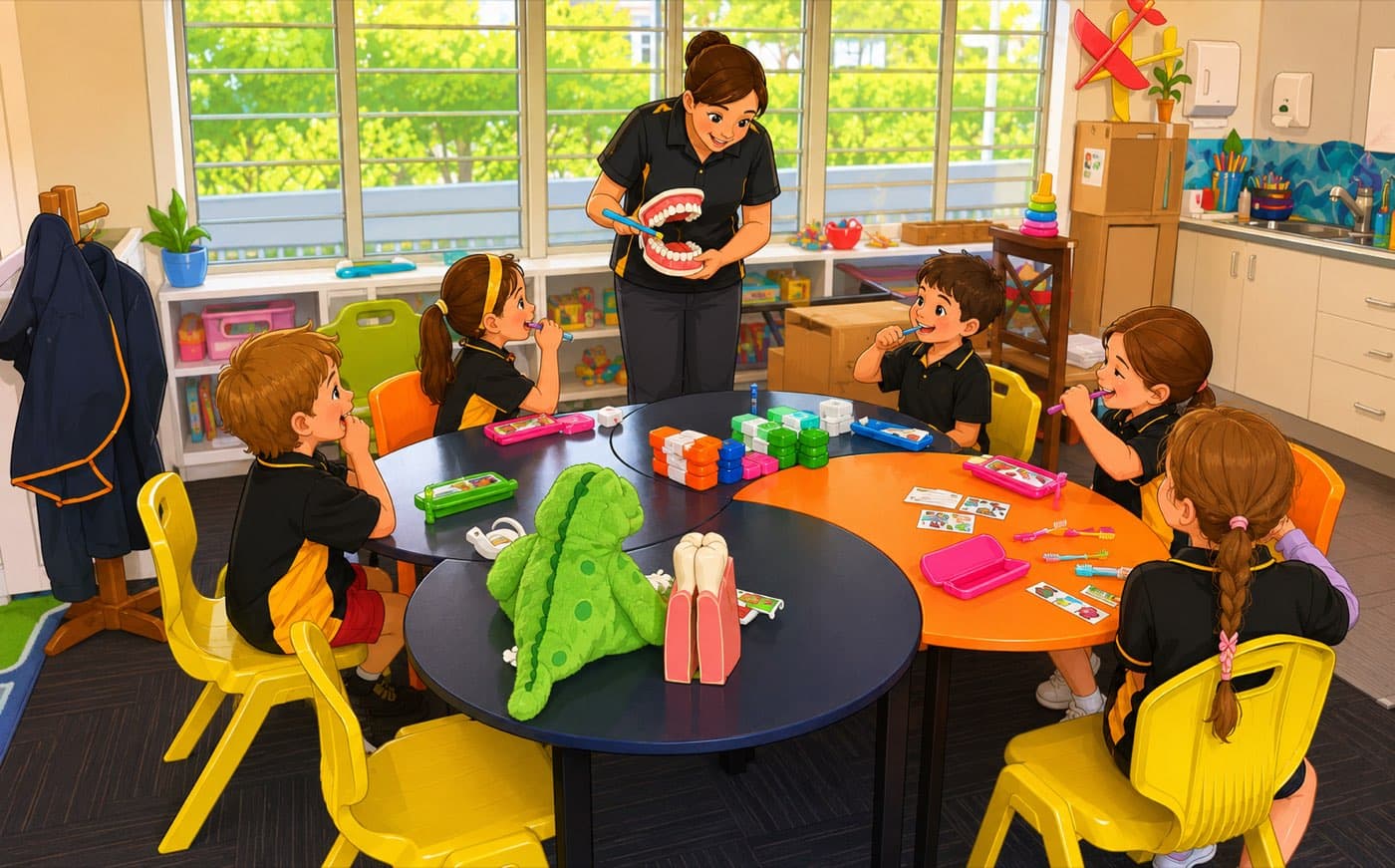
Receive
Each child has an oral health check, including how their teeth bite together, and then takes home a free toothbrush + toothpaste pack. With consent, they also have a remineralising varnish.
What you get with a free teacher account
The lessons, the decks and the games are open to everyone. An account adds the files you print and a place to keep track.
- Every worksheet and the teacher guide
- My classroom, with a tick for each lesson
- First word when new year levels launch
The lessons
Taught in order. Each one opens with its learning intention, success criteria and everything you need to run it.
- Before the visit
Lesson 1: Your permanent set
Runs before the visit. Year 5 and 6 students are at the end of the mixed dentition: the second molars are arriving or about to, and the mouth they finish primary school with is close to the mouth they will have at forty. The lesson makes that concrete with the eruption ages and a count, then opens the distinction the rest of the unit runs on, that teeth are damaged in two different ways.Open the lesson - The visit
Lesson 2: The Whole Bite Club visit
The visit as it lands for Years 5 and 6. These students can interrogate a professional properly, so the lesson's job is to make them good interviewers and good note-takers, and to give them enough vocabulary beforehand that the answers land. They meet the two preventive treatments as things with a rationale rather than as things that happen to them. The deck forks for classes with no visit booked.Open the lesson - After the visit
Lesson 3: Demineralise, remineralise
The science lesson. Enamel is in constant exchange with the mouth around it: acid pulls minerals out, saliva and toothpaste put them back. That turns tooth decay from a moral story into a chemical balance, and it maps exactly onto the Year 6 science content description about reversible and irreversible change. Students run a fair test on eggshell, and then are told honestly what the eggshell cannot show them.Open the lesson - After the visit
Lesson 4: The pH of the drinks aisle
Students meet the number that decides whether a drink softens enamel, then meet a real Australian data set of 177 drinks. The finding that lands hardest is that removing the sugar does not remove the acid: a zero-sugar cola sits in the same erosive band as the full-sugar one. Students handle, compare and represent the data, which is Year 6 statistics as much as it is health.Open the lesson - After the visit
Lesson 5: Who is telling you what to drink?
The unit closes where AC9HP6P09 points: at sources. Students compare four things that say different things about the same drink, work out which they can rely on and why, then build a campaign piece for a real audience in their own school. This is the Years 5–6 answer to the F-2 "healthy smile hero" finish, and it carries the band's summative work sample.Open the lesson
Curriculum links
Aligned to the Health and Physical Education learning area of the Australian Curriculum Version 9.0.
AC9HP6P08
Year 5 and 6
analyse and rehearse protective behaviours and help-seeking strategies that can be used in a range of online and offline situations
Personal, social and community health
AC9HP6P09
Year 5 and 6
investigate different sources and types of health information and how these apply to their own and others' health choices
Personal, social and community health
AC9HP6P10
Year 5 and 6
analyse how behaviours influence the health, safety, relationships and wellbeing of individuals and communities
Personal, social and community health
See which lesson covers which code
© Australian Curriculum, Assessment and Reporting Authority (ACARA) 2010 to present, unless otherwise indicated. This material was downloaded from the Australian Curriculum website (accessed 5 September 2026) and was not modified. The material is licensed under CC BY 4.0 Attribution 4.0 International Deed.
ACARA does not endorse any product that uses the Australian Curriculum or make any representations as to the quality of such products. Any product that uses material published on this website should not be taken to be affiliated with ACARA or have the sponsorship or approval of ACARA.
Download all
Free with a teacher account
The whole set for this band is one click away with a free teacher account.
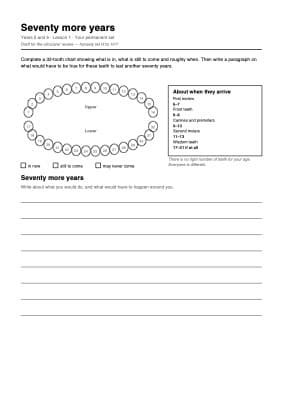 Seventy more yearsWorksheet, PDFFree with a teacher accountCreate a free teacher account for Seventy more yearsSign in for Seventy more years
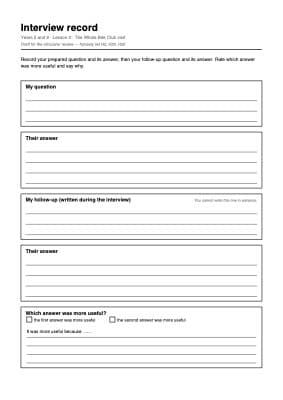 Interview recordWorksheet, PDFFree with a teacher accountCreate a free teacher account for Interview recordSign in for Interview record
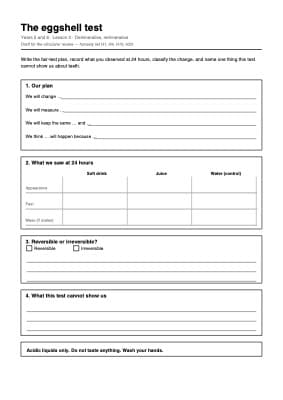 The eggshell testWorksheet, PDF
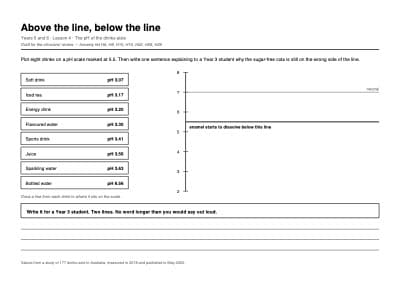 Above the line, below the lineWorksheet, PDFFree with a teacher accountCreate a free teacher account for Above the line, below the lineSign in for Above the line, below the line
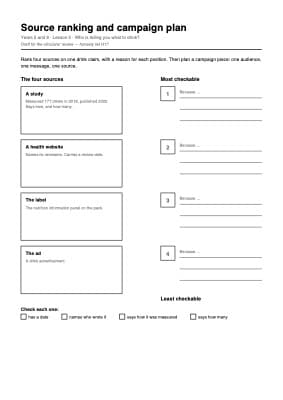 Source ranking and campaign planWorksheet, PDFFree with a teacher accountCreate a free teacher account for Source ranking and campaign planSign in for Source ranking and campaign plan
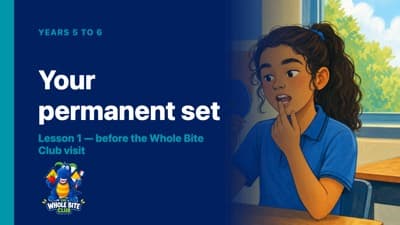 Lesson 1: Your permanent set (PowerPoint)Lesson slides, PPTXYour permanent set, slide by slide, with the lesson’s teacher notes in the notes pane.Free with a teacher accountCreate a free teacher account for Lesson 1: Your permanent set (PowerPoint)Sign in for Lesson 1: Your permanent set (PowerPoint)
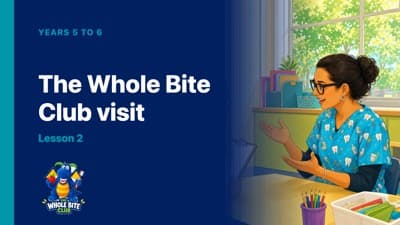 Lesson 2: The Whole Bite Club visit (PowerPoint)Lesson slides, PPTXThe Whole Bite Club visit, slide by slide, with the lesson’s teacher notes in the notes pane.Free with a teacher accountCreate a free teacher account for Lesson 2: The Whole Bite Club visit (PowerPoint)Sign in for Lesson 2: The Whole Bite Club visit (PowerPoint)
 Lesson 3: Demineralise, remineralise (PowerPoint)Lesson slides, PPTXDemineralise, remineralise, slide by slide, with the lesson’s teacher notes in the notes pane.Free with a teacher accountCreate a free teacher account for Lesson 3: Demineralise, remineralise (PowerPoint)Sign in for Lesson 3: Demineralise, remineralise (PowerPoint)
 Lesson 4: The pH of the drinks aisle (PowerPoint)Lesson slides, PPTXThe pH of the drinks aisle, slide by slide, with the lesson’s teacher notes in the notes pane.Free with a teacher accountCreate a free teacher account for Lesson 4: The pH of the drinks aisle (PowerPoint)Sign in for Lesson 4: The pH of the drinks aisle (PowerPoint)
 Lesson 5: Who is telling you what to drink? (PowerPoint)Lesson slides, PPTXWho is telling you what to drink?, slide by slide, with the lesson’s teacher notes in the notes pane.Free with a teacher accountCreate a free teacher account for Lesson 5: Who is telling you what to drink? (PowerPoint)Sign in for Lesson 5: Who is telling you what to drink? (PowerPoint)