Content
Introduction
- Ask the guiding question: What do we use our teeth for? Record student responses.
- Invite students to use a mirror to look at their own teeth. Ask what they notice — different shapes, sizes and positions.
Body
What are teeth for?
- Discuss the different jobs our teeth do: biting, tearing, chewing, and helping us to speak and smile.
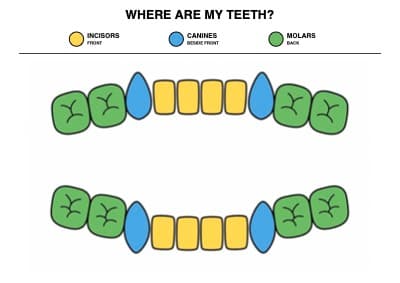
- Introduce the main types of teeth using a printed mouth or teeth diagram: incisors (bite), canines (tear), and molars (grind). Have students feel the different shapes with a clean finger or their tongue.
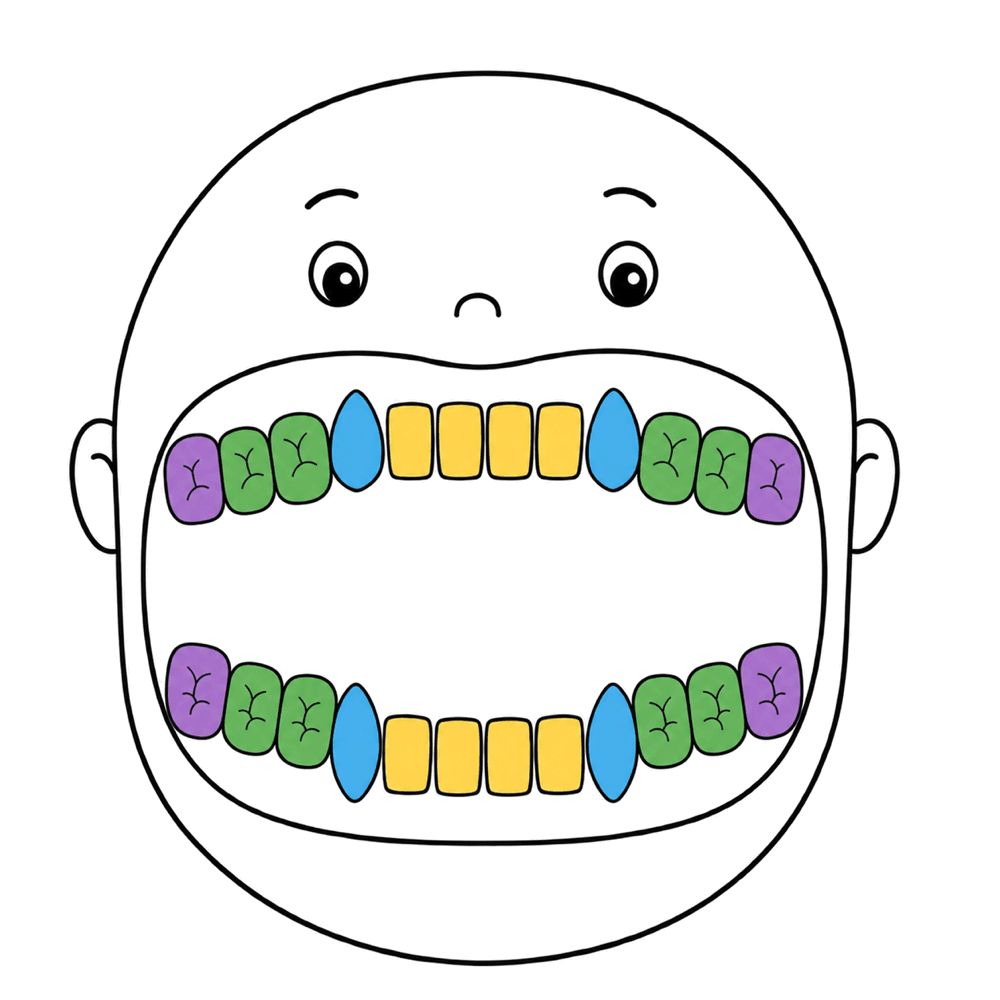
- IncisorsBite
- CaninesTear
- MolarsChew
- Six-year-old molarsGrown-up chew
Baby teeth and adult teeth
- Explain that we grow two sets of teeth in our lifetime. Baby teeth come first, and adult teeth grow in to replace them as we get older. Ask who has lost a tooth, and discuss.
- Emphasise that baby teeth are important and still need to be cared for — they help us eat and speak, and hold space for the adult teeth.
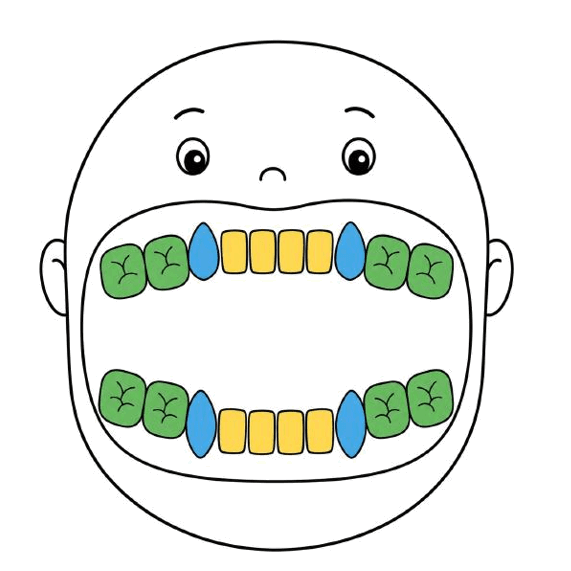
- IncisorsBite
- CaninesTear
- MolarsChew
Parts of a tooth
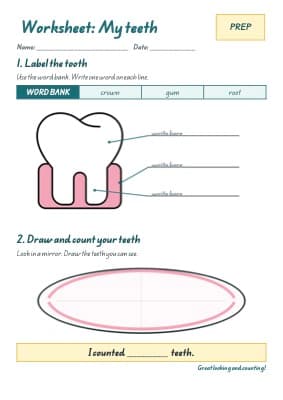
- Introduce the parts of a tooth (crown, root, gum) at a simple level.
- Explain that enamel is the hard outer layer that protects the tooth.
Worksheet: My teeth
- Students label the parts of a tooth and/or draw and count their own teeth.
Conclusion
- Look after your smile!
- Review the key messages: teeth do important jobs; we grow two sets of teeth; and we need to look after them every day.
- Ask students to share one thing they already do to look after their teeth.
- Let students know the Oral Health Home team will visit soon for The Whole Bite Club — something to look forward to.