
3 to 5 years
Ready for school
School is coming. The habits your child keeps now are the ones they take with them.
This month
- Make a plan for the thumb.
- A water bottle for kindy.
- Lift the lip once a month.
- Book a check-up.
- You still finish the brushing.
The first adult teeth come at about 6, behind the baby teeth. Nothing falls out first.
Keep brushing for your child, or finish what they start, until about 8.
From 18 months to six, a children's toothpaste. From six, the regular family kind.
Still sucking a thumb after 4? Help them stop now, before the adult teeth come.
Water at kindy and at home. Juice and flavoured milk are sometimes drinks.
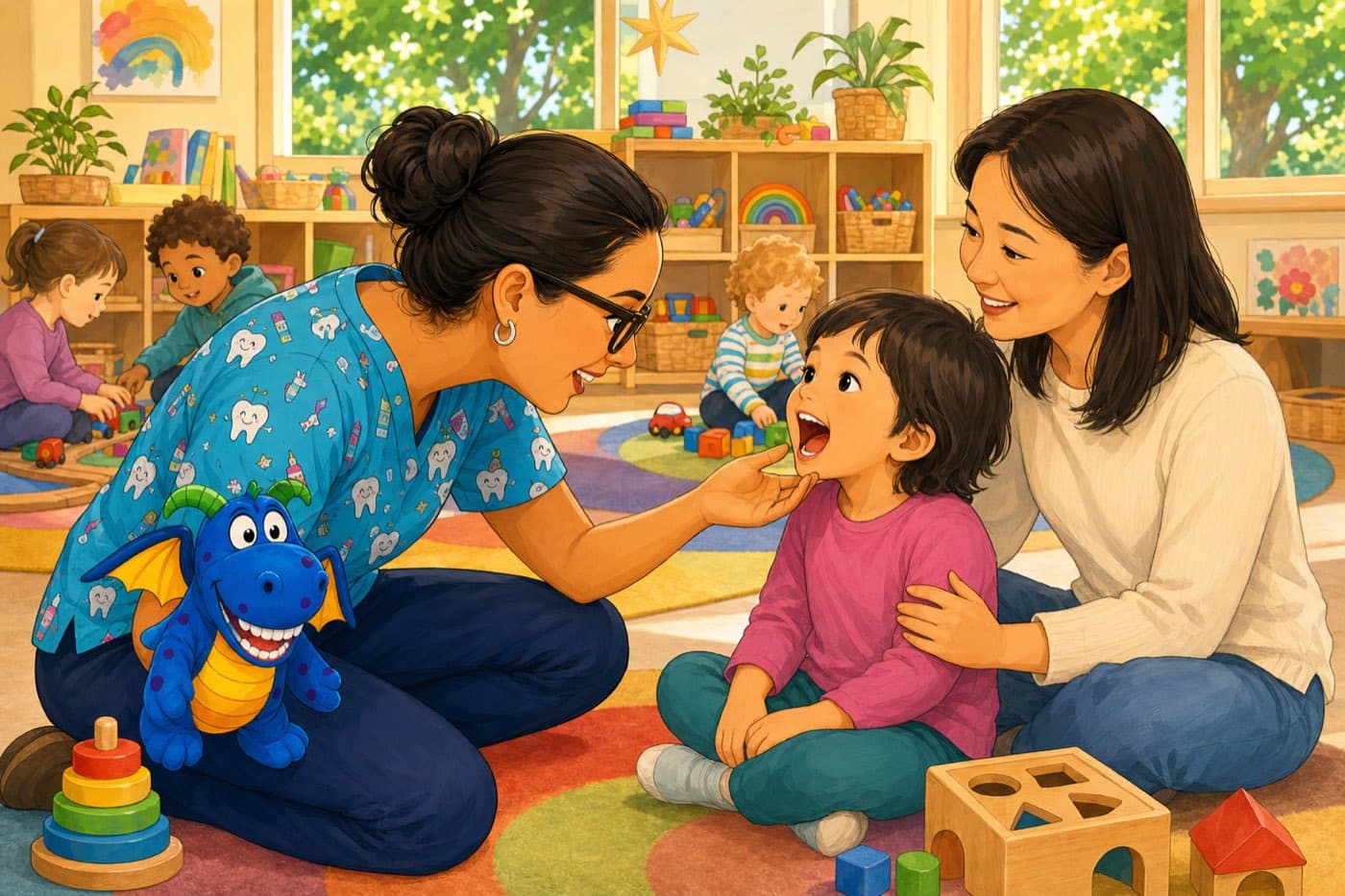
Play dentist at home. Count the teeth. Never say 'be brave', 'needle' or 'drill'.
The club visits kindies and playgroups. Register your child and we will check their teeth.
When to get help
- Chipped, wobbly or pushed in? See a dentist today.
- Call 000 if your child cannot breathe or swallow, or the swelling is spreading fast.
- Not sure? Ring 13 HEALTH on 13 43 25 84, any time of day or night.
Register your child
Tell us who your child is and where they go. We will check their teeth when we visit.
Sign up todayWhere this comes from
We checked every line on this page against these.
Oral Health Home's answers to the platform's decisions, September 2026
Oral Health Home · Held by Oral Health Home; not published online
Five things only the clinicians can say: that in the schools the club visits about 40 to 45 per cent of children have already had tooth decay and in some it is closer to half; that the acid attack is taught as about 20 minutes, the single figure inside the published range; that at a school visit the remineralising varnish is painted on every child whose family said yes; that thirteen teaspoons of sugar in a bottle is not for children; and, until Queensland Health's own page is opened by a named person, that South East Queensland's tap water is treated and many regional towns' is not.
Teeth development in children(opens in a new tab)
Better Health Channel · Opened 5 September 2026
That children grow two sets of teeth, roughly when each adult tooth arrives, and that baby teeth hold the space the adult teeth need.
Toothbrushing – children 0-6 years(opens in a new tab)
Better Health Channel · Opened 5 September 2026
Brushing twice a day, about two minutes, every surface and along the gum line, and spitting the toothpaste out rather than rinsing it away.
Kids Health Info: Dental care(opens in a new tab)
The Royal Children’s Hospital Melbourne · Opened 5 September 2026
That a check-up is a regular habit rather than something you go for when a tooth hurts, and roughly how often children go.
Dental injuries - Knocked out, chipped or cracked teeth(opens in a new tab)
Better Health Channel · Opened 5 September 2026
The first aid for a knocked-out adult tooth: hold it by the top, put it back if you can, keep it in milk if you cannot, and never put a baby tooth back.
Dental injury(opens in a new tab)
healthdirect Australia · Opened 7 September 2026
That a knocked-out baby tooth is never put back, that a cracked, chipped or loose tooth still needs a dentist, and the signs that mean an ambulance rather than an appointment.
Preschooler teeth development, dental health and dental care(opens in a new tab)
Raising Children Network · Opened 7 September 2026
What a three to five year old's teeth need: an adult still finishing the brushing, water rather than juice or flavoured milk, and a dentist the same day for a knocked or moved tooth.
Thumb sucking, teeth grinding & tooth decay: 3-5 years(opens in a new tab)
Raising Children Network · Opened 7 September 2026
That a thumb habit still going after four is worth helping a child out of before the adult teeth arrive, and the marks on a tooth a parent might notice.
First dental visits(PDF, opens in a new tab)
Australian Dental Association · Opened 7 September 2026 · PDF
That the first visit is when the first teeth come through or by age one, whichever is first; what the dentist talks to the parent about; and the words never to use with a child about it.
Tooth eruption charts(PDF, opens in a new tab)
Australian Dental Association · Opened 7 September 2026 · PDF
The order and the months the twenty baby teeth arrive in, that a child is seen by one however many teeth are there, and that the first ones start to go at about six.
Fluoride use for oral health in Western Australia(PDF, opens in a new tab)
Western Australian Department of Health · Opened 7 September 2026 · PDF
The national guideline's numbered recommendations as a state health department reproduces them: no toothpaste before 18 months except on a dental professional's advice, a children's toothpaste from 18 months to six, and the regular family kind from six, spat out and not rinsed.
Questions? admin@oralhealthhome.com