
1 to 2 years
You do the brushing
Your child eats what you eat now. Water is the drink, and you do the brushing.
This month
- Swap the bottle for a cup.
- Children's toothpaste from 18 months.
- Lift the lip once a month.
- Ask the nurse about Lift the Lip.
- Water in the cup, not juice.
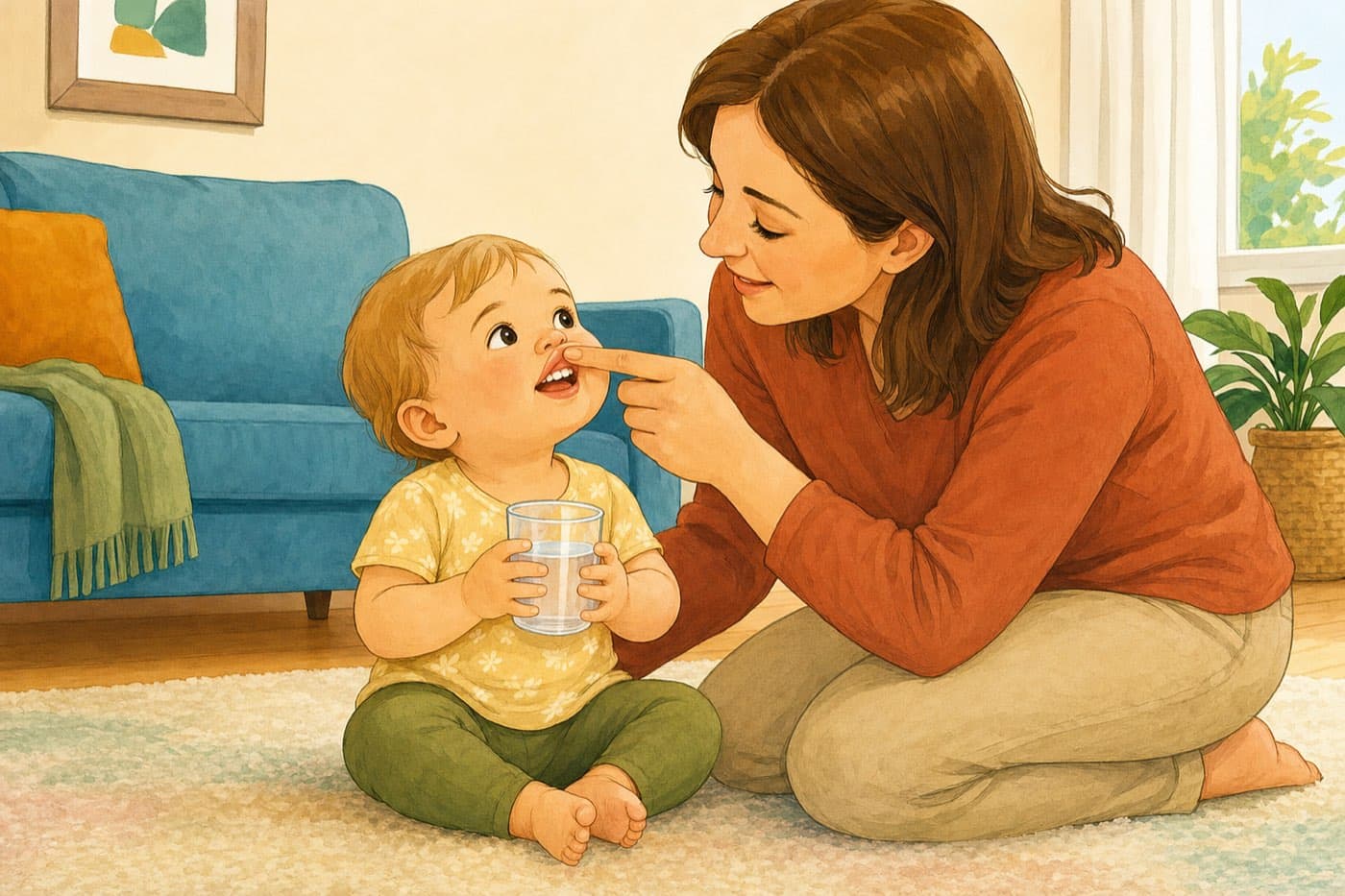
Water is the drink now. Tap water is best. Plain milk with meals, in a cup. By 1, a cup beats a bottle. A bottle is for milk or water, and never in bed.
At 18 months, start a children's toothpaste, unless your dentist says otherwise. A pea-sized amount is enough. Spit it out. Do not rinse. Keep the tube out of reach.
You do the brushing, morning and night. Let your child hold the brush first. Then you finish.
No juice, cordial or soft drink. Sugar is sugar.
Once a month, lift the top lip and look at the front teeth near the gum. White chalky lines: book a check. Brown or yellow spots that do not brush off: book it today.
Ask your child health nurse to lift the lip at your child's routine checks. Their referral makes public dental care free.
When to get help
- A knocked-out baby tooth does not go back in. See a dentist today, and bring the tooth.
- Call 000 if your child cannot breathe or swallow, or the swelling is spreading fast.
- Not sure? Ring 13 HEALTH on 13 43 25 84, any time of day or night.
Register your child
Tell us who your child is and where they go. We will check their teeth when we visit.
Sign up todayWhere this comes from
We checked every line on this page against these.
Toothbrushing – children 0-6 years(opens in a new tab)
Better Health Channel · Opened 5 September 2026
Brushing twice a day, about two minutes, every surface and along the gum line, and spitting the toothpaste out rather than rinsing it away.
Kids Health Info: Dental care(opens in a new tab)
The Royal Children’s Hospital Melbourne · Opened 5 September 2026
That a check-up is a regular habit rather than something you go for when a tooth hurts, and roughly how often children go.
Dental injuries - Knocked out, chipped or cracked teeth(opens in a new tab)
Better Health Channel · Opened 5 September 2026
The first aid for a knocked-out adult tooth: hold it by the top, put it back if you can, keep it in milk if you cannot, and never put a baby tooth back.
Dental injury(opens in a new tab)
healthdirect Australia · Opened 7 September 2026
That a knocked-out baby tooth is never put back, that a cracked, chipped or loose tooth still needs a dentist, and the signs that mean an ambulance rather than an appointment.
Lift the Lip(opens in a new tab)
Metro North Health · Opened 7 September 2026
Queensland Health's own screen for children from birth to five: how a parent lifts the lip and what a white chalky line near the gum means, and that a child health nurse's referral makes public dental care free for the child and their brothers and sisters.
Text alternative: Lift the lip poster(opens in a new tab)
NSW Health · Opened 7 September 2026
Once a month as the frequency for a parent's own look, and the two things it turns up: white lines along the gum line, which are booked now, and brown or yellow spots that do not brush off, which are urgent. No Queensland page states a frequency.
Dental health & dental care for toddlers(opens in a new tab)
Raising Children Network · Opened 7 September 2026
Brushing a toddler's teeth morning and night, letting the child go first and the adult finishing, and that a parent keeps helping until about eight.
Food and drinks for children(PDF, opens in a new tab)
Australian Dental Association · Opened 7 September 2026 · PDF
Milk and water as the drinks, a cup rather than a bottle after one, and that sticky or sweet snacks sit on the teeth longest.
Children's Oral Health(PDF, opens in a new tab)
Australian Dental Association · Opened 7 September 2026 · PDF
Wiping a baby's gums with a damp cloth before the teeth arrive, a children's toothpaste from 18 months, and an adult still helping at eight or nine.
Fluoride use for oral health in Western Australia(PDF, opens in a new tab)
Western Australian Department of Health · Opened 7 September 2026 · PDF
The national guideline's numbered recommendations as a state health department reproduces them: no toothpaste before 18 months except on a dental professional's advice, a children's toothpaste from 18 months to six, and the regular family kind from six, spat out and not rinsed.
Questions? admin@oralhealthhome.com